We have a lot of agency when it comes to increasing our healthspan
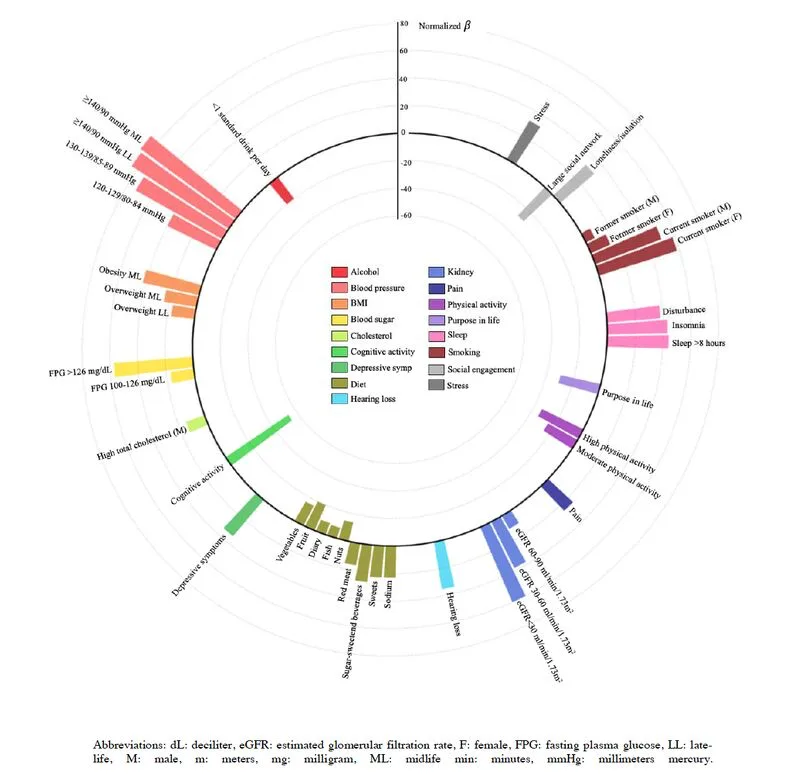
No surprise there you say? Diet, exercise and sleep will improve your odds? Yes. But the surprise is the magnitude of the control we have over the risk factors for some of the worst diseases of aging: we can reduce the composite risk of stroke, dementia and late-life depression by 50% by taking charge of these factors.
TL;DR: keep your blood pressure under control, engage in regular intellectual as well as physical activity, rein in your blood glucose and weight, don’t smoke, don’t drink, avoid stress (ha!), get quality sleep, be a pescatarian, take care of your kidneys by minimizing processed food and salt, have a purpose in life and enjoy a vigorous social life. Do that and your probability of suffering from any of these diseases of old age collapses.
“60% of stroke, 40% of dementia and 35% of late-life depression (LLD) are attributable to modifiable risk factors, with great overlap due to shared pathophysiology”
That’s the opening salvo of an article published recently in @BMJ Journal of Neurology, Neurosurgery & Psychiatry, “Modifiable risk factors for stroke, dementia and late-life depression: a systematic review and DALY-weighted risk factors for a composite outcome” (paywalled article: https://jnnp.bmj.com/content/early/2025/03/21/jnnp-2024-334925; MedRxiv preprint: www.medrxiv.org/content/10.1101/2024.07.08.243…). In it, the authors report the results of a “meta-meta-analysis”, selecting meta-analyses reporting effect sizes of modifiable risk factors on the incidence of stroke, dementia and/or late life depression in PubMed, Embase and PsycInfo, between January 2000 and September 2023. Disability-adjusted life year (DALY) weighted beta (β)-coefficients were calculated for a composite outcome and normalized.
The figure here shows the beta coefficients for the risk factors, positive is bad, negative is good: the biggest factor on the bad side is blood pressure, which is consistent with recent studies (e.g., on all-cause dementia) and the biggest factor on the good side is cognitive activity. Obviously the need to have more causal links is critical: someone with onset dementia is less likely to engage in a lot of cognitive activity, a form of reverse causality the authors acknowledge.