Your immune system doesn't just wear out with age, it actively reprograms itself
, starting in middle age (mid-50s), well before you'd be considered "elderly.
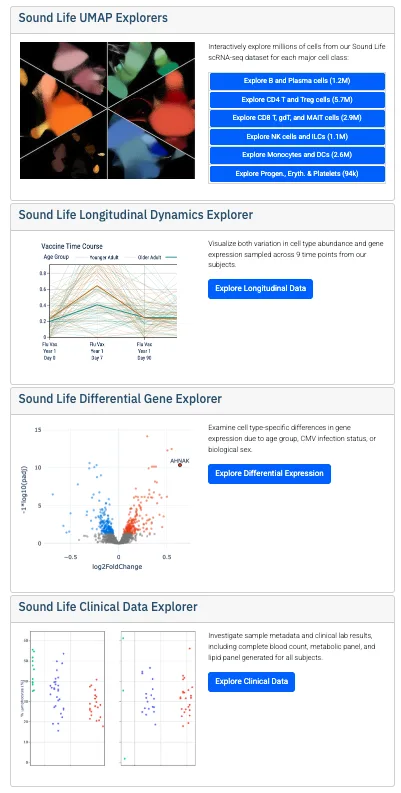
A team lead by Claire Gustafson, Ph.D., Peter Skene (both at the Allen Institute for Immunology) and Jane Buckner, MD (Benaroya Research Institute) tracked the immune systems of healthy adults (ages 25-65+) over 2 years, analyzing millions of immune cells and their responses to flu vaccines (Multi-omic profiling reveals age-related immune dynamics in healthy adults), all links in the comments. It also comes with a great playground to explore the data (image below is from the website), my only issue with it being that they (like everyone else) are still using the misleading UMAP algorithm for visualization.
They found that:
➡️ T cells (immune cells that help coordinate defense responses) shift toward a "Type 2" pattern as you age, which causes your body to produce less effective antibodies against vaccines you've had many times before
➡️ Importantly, this isn't caused by inflammation or chronic infections: it seems to be a "natural" aging process (although other latent causes might still be identified).
The downstream clinical applications? Here are some thoughts.
1️⃣ Better Vaccines for Older Adults. Vaccines could be redesigned specifically for how older immune systems work and boosters could be timed better based on these immune changes. Vaccine formulations could also counteract the Type 2 bias.
2️⃣ Early Detection & Prevention. The "RNA Age Metric" the authors developed could identify people whose immune systems are aging faster than expected and are at risk for weak vaccine responses, certain autoimmune diseases (they found similar changes in people who later developed rheumatoid arthritis), and infections.
3️⃣ Targeted Interventions. Specific molecules (like GATA3 and IL-4) seem to be driving these changes, suggesting possible targets for future therapies
4️⃣ Understanding Disease Risk. These findings explain why older adults are more susceptible to certain infections. They help explain why some autoimmune diseases develop in middle age.
https://www.nature.com/articles/s41586-025-09686-5
apps.allenimmunology.org/aifi/insights/dynamic…