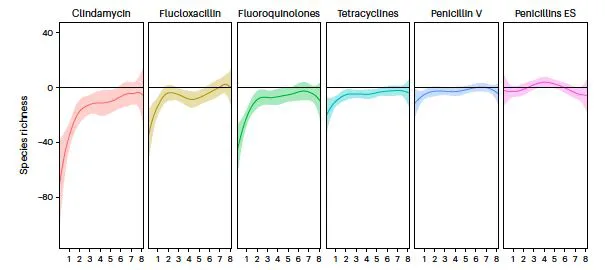
The effect of one course of antibiotics on the gut microbiome may persist for several years
That antibiotics damage your gut's microbiota is a well known side effect and one reason (the other being pathogen resistance) why we should limit their use to specific situations. We also know that it can wipe out a large portion of the friendly gut bacteria that help with all kinds of stuff. But just how long does the effect persist? A team led by Tove Fall of Uppsala University addressed this question by combining "individual-level data from the Swedish Prescribed Drug Register with fecal metagenomes of 14,979 adults to examine the association between oral antibiotic use over 8 years and gut microbiome" and reported their findings in a Nature Medicine (Antibiotic use and gut microbiome composition links from individual-level prescription data of 14,979 individuals, Open Access link in comments). The results of this study are stunning: even one course of antibiotics can have a persistent effect on the gut microbiota for years, with the killer trio of clindamycin (example brand name: Cleocin), fluoroquinolones (e.g., Cipro) and flucloxacillin (e.g., Floxapen) accounting for most of the associations, even several years after the treatment. The first two, being broad-spectrum antibiotics, were expected to have a larger effect, but the third, targeting primarily gram-positive bacteria (e.g., Staphylococcus aureus, Streptococcus pyogenes), is surprising and might be an anomaly. The richness and diversity of the gut ecosystem just collapse and recover slowly. Lots of interesting data in the article. The magnitude and duration of the disruption is definitely worth the headlines. One crucial piece of information that would have provided more insight is whether an individual also took probiotics to help "restore" their gut microbial ecosystem, and in an ideal world, the composition and dosage of said probiotic cocktail. A probiotic regimen after the end of the antibiotics treatment has been "common wisdom" for years despite no clear evidence that it helps. And the Wild West that is the probiotic supplementation world does not inspire confidence. But better tools for measuring the composition of the gut microbiome and better characterized, targeted and properly dosed probiotic cocktails that include more than the "easy" bacteria (e.g., Lactobacillus) create an exciting opportunity.