Delusions of grandeur and debates about illusions of thinking obscure from the actual, practical usefulness of AI
I have had it with the pointless AGI talk (will it be 2027, 2035, or is "it" already here?), the slow singularity (can you feel it?) but also the recent flare up about whether LLMs are "thinking". Both the illusion paper itself (co-authored by my old deskmate Samy Bengio) and Anthropic's rebuttal (co-authored by Claude itself) are actually good reminders that LLMs do (a lot of) stuff and we don't know what to call it. That's the main problem.
➡️ They are not "thinking" in any familiar way, although they sometimes do give us the illusion that they thinking just like humans.
➡️ At the same time, they are not just "next token predictors", even though their many detractors are pushing that narrative.
I have personally experienced the alien superpower of LLMs and research agents and their ability to connect dots I had never even considered before. I have witnessed its transformative potential in many others too. That superpower is a generative superpower that requires the human end user to understand, evaluate, verify, refine, correct, redirect and, on occasion, recognize the nuggets generated. Some models are now endowed with an ability to evaluate hypotheses in silico or in the real world (including robotic embodiments), which opens up a whole new universe of possibilities (and their attendant fears).
But, for now, the ability to know what's interesting is a uniquely human superpower.
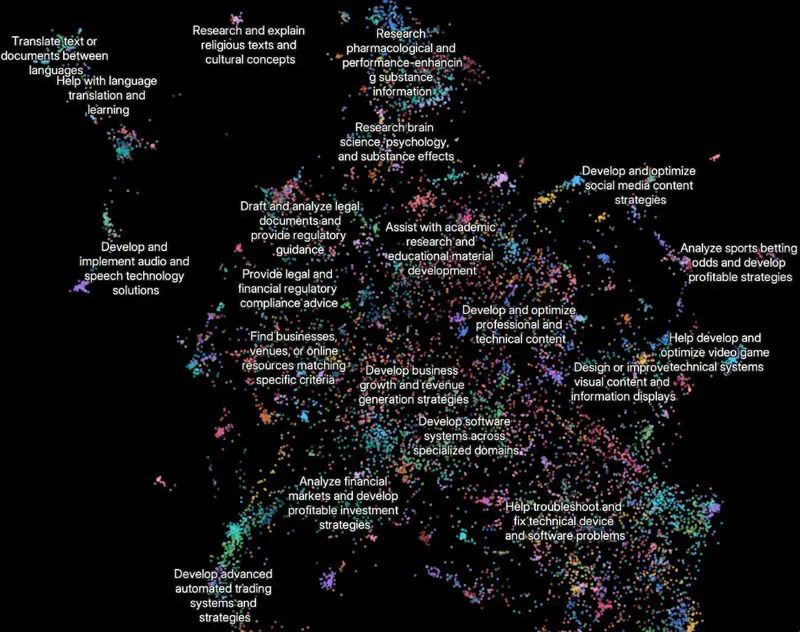
In that vein, I found Anthropic's description of how they built their research system (How we built our multi-agent research system) refreshing and the use cases a window into the uniquely human capabilities required to extract value from the generative alien superpower. Note that this is no an endorsement of Dario Amodei's unproductive, over-the-top statements.
So, while I think a healthy debate around the need to understand LLMs more deeply is useful, what is lost in the flare-ups is how incredibly useful these tools are -in the hands of competent humans. They are powerful tools of individual productivity and creativity, not productive or creative on their own but in their intersection with human needs and imagination.