Cell Vaults
I was recently reminded of the existence of a mysterious organelle discovered in 1986 by @nancy kedersha and @leonard rome, about 3 times the size of ribosomes, that inhabits most of our cells, and the cells of a lot of (but not all: not insects, plants, fungi and most bacteria lack them) organisms as well. Not only that, there are THOUSANDS or even sometimes tens of thousands of them in each cell. And their structure is what gave them their name: they look like “the vaulted ceilings in cathedral.” It is composed of 78 copies of a large protein (827 amino acids), the Major Vault Protein or MVP, vPARP and TEP1 enzymes and a small amount of RNA.
And we still have no idea what they do.
“Some organisms with MVP protein knocked out were found to be slightly ‘slow growers’, but MVP knockout mice were perfectly healthy. Losing the internal TEP1 protein, known to be a telomerase-RNA binding protein, also had little effect, with no noticeable effect on the telomeres of the mice, their ageing, or their health generally. Knocking out another vault protein, known as VPARP, led to mice with very slightly raised tumour growth when tumours were induced. Knocking out all three vault proteins, creating completely vaultless mice, also led to phenotypically normal mice, albeit with some subtle immune system issues”. “Promising leads have come and gone over the years, linking vaults with resistance to infections, cell signalling and autophagy. The over-expression of the major vault protein in certain lines of drug-resistant cancers led to vaults being a topic of interest in many studies of multidrug resistance” (https://www.rsb.org.uk/biologist-features/unlocking-the-vault).
Rome is still working on vaults, but, incredibly, the reference textbook for cell biology, Molecular Biology of the Cell, “hasn’t mentioned cell vaults in any of its seven editions, which span 40 years.” (www.science.org/content/article/biologist-aims…)
Biology is messy. And exhilarating.
Image from the 1986 article: N L Kedersha, L H Rome (1986) Isolation and characterization of a novel ribonucleoprotein particle: large structures contain a single species of small RNA. J Cell Biol (1986) 103 (3): 699–709. https://doi.org/10.1083/jcb.103.3.699, open access: https://pmc.ncbi.nlm.nih.gov/articles/PMC2114306/pdf/jc1033699.pdf
logancollinsblog.com/2025/06/03/key-facts-abou…
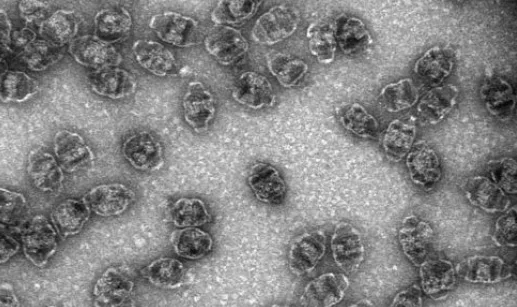
N L Kedersha, L H Rome (1986) Isolation and characterization of a novel ribonucleoprotein particle: large structures contain a single species of small RNA. J Cell Biol (1986) 103 (3): 699–709. lnkd.in/gRDEjANS open access: https://lnkd.in/gtDBZyqF