The Phase II wall is the next monumental challenge for AI
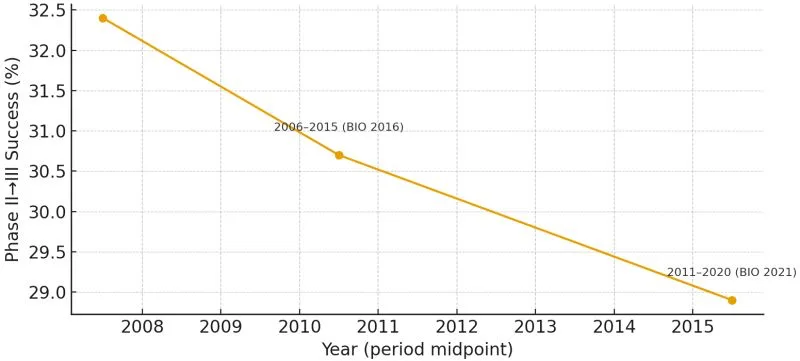
Spurred by a conversation with Reid Hoffman at DOC, I dug out Phase II clinical trial success rates (Pts) since the 1990s (I used public data for this as a good first approximation). Here is the trend line over all therapeutic areas: don't get spooked by the apparent rapid decline, the y-axis only goes from 29 to 32.5, but still, Pts for phase II has been declining for 35 years.
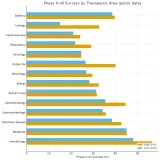
I'll have another graph by therapeutic area that shows that some areas actually improved (for a number of reasons). But overall, the inescapable conclusion is that Phase II has been and remains the biggest, annoyingly resistant, obstacle to success in clinical development, but it is also the biggest Value Inflection Point: succeed in Phase II (specifically IIa) and the likelihood of approval goes way up and so does the risk-adjusted value of the asset.
Fixing Phase II Pts would require good predictive models of efficacy in humans (and to an extent better predictive models of toxicity, which have been making progress): we just don't have that and animal models are still poor translational predictors. The rapid progress in AI-based drug discovery and predictive models takes the best drug developers to a successful Phase I. The Phase II wall is the next monumental challenge for AI.
Manas AI, Simon Birksø Larsen