The Perfect Egg
And I thought that the 63-degree Celsius egg (or 145.4 F), whereby you leave a whole egg in its shell in a 63-degree (60-70 to control how runny you want the yolk) water bath for one hour, was the pinnacle of eggstasy (Hervé This, vo Kientza). But at that temperature, the egg albumen, aka egg white, does not fully set. And for some people, that is just unacceptable.
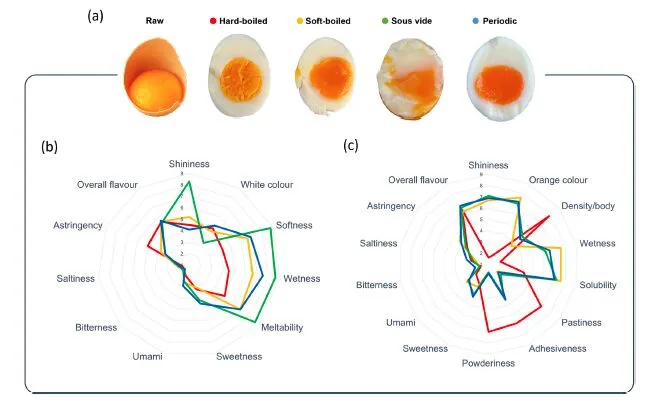
I am eggcited to share that a group of Italian (of course) scientists from the Università degli Studi di Napoli Federico II (UniNa) / University of Naples Federico II found a way to get to egg perfection. It only takes 32 minutes total but it requires your full attention and maintaining TWO water baths at two different temperatures, 85 C (to cook the albumen) and 65 C: alternate between the two baths, 2 minutes in each and repeat 8 times. Link to the Open Access paper in the comments. The "time-varying boundary condition", here periodic cooking, makes sure the albumen cooks without the high temperature reaching the yolk during the short period of the 85 C bath. In the picture below you can see that the sous-vide egg's albumen is still runny but it is perfectly white with periodic cooking while the yolk maintains a smooth and creamy texture.
Two comments come to mind:
(1) Perfection (assuming this is your perfect egg) has a price: it is still a lot easier to leave an egg for one hour in one 65 C bath than to transfer it 16 times between two baths. My guess is that the 65 C will win the practical contest.
(2) It begs the question: what else is possible when you open up the space of cooking methods? Some of the same scientists created a "foaming pizza" using dynamic variable temperature. This simple idea (on paper) has lead to textural innovations, so there may be other ideas that may lead to entirely novel sensory experiences.
I the meantime, I remain eggstatic.