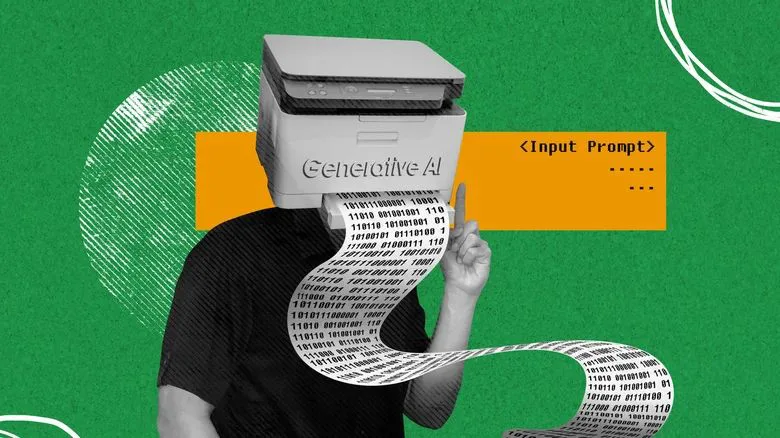
Study Shows AI Can Pass The Turing Test More Reliably Than Humans
The title of this nice BGR article did not surprise me (first because the Turing Test, as the article rightfully reminds us, is not very scientific and has highly limiting quirks; second because LLMs have become pretty good at mimicking human text, a super-evolved version of Eliza; and lastly because the preprint it refers to is more than 12 months old, an eternity in AI years even though the PNAS paper just came out). It is a nicely done, pre-registered study. As the study authors state, "The results imply current AI systems can effectively imitate people in short interactions, while also raising questions about how effective the test is as a measure of intelligence." In fact I think it answers the question(s) about the effectiveness of "the" test: it is parlor game of historical significance that has outlived its alleged usefulness. But it did remind me of a delightful and deeply insightful talk I attended in 2012 at the Santa Fe Institute by Brian Christian, the author of The Most Human Human (2011) [and also Algorithms to Live By (2016, co-authored with Tom Griffiths), and The Alignment Problem (2020)]. In the book, he describes the prize given to computer programs best at passing for humans (the most human computer), but it is mostly about the other, weirder prize for the human person who does the best at convincing judges of their humanness: the most human human. The talk is available on youtube, link in the comments: it is well worth watching not just for the entertainment value but for what it teaches us about what it means to be human.
https://www.bgr.com/2187757/ai-passes-turing-test-study/
www.pnas.org/doi/epdf/10.1073/pnas.2524472123
https://www.youtube.com/watch?v=8Zs-GQ-ECLs&list=PL7D69D1FFE63DA81A&index=22
https://brianchristian.org/the-most-human-human/