Reimagining human-centric drug development with new approach methodologies
Timely article by Xuekun WU, Matthew Wu, James Zou, Nicole Kleinstreuer, Joseph C. Wu: https://www.science.org/doi/10.1126/science.aeb0045
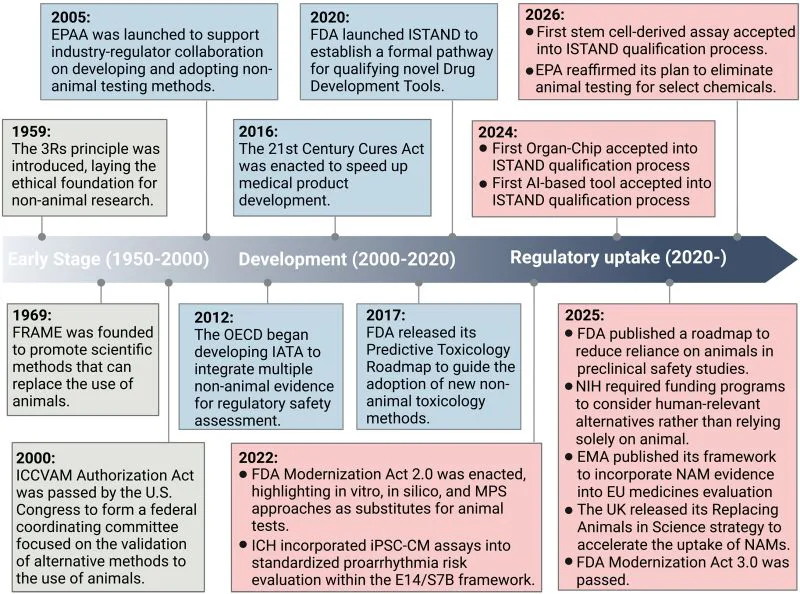
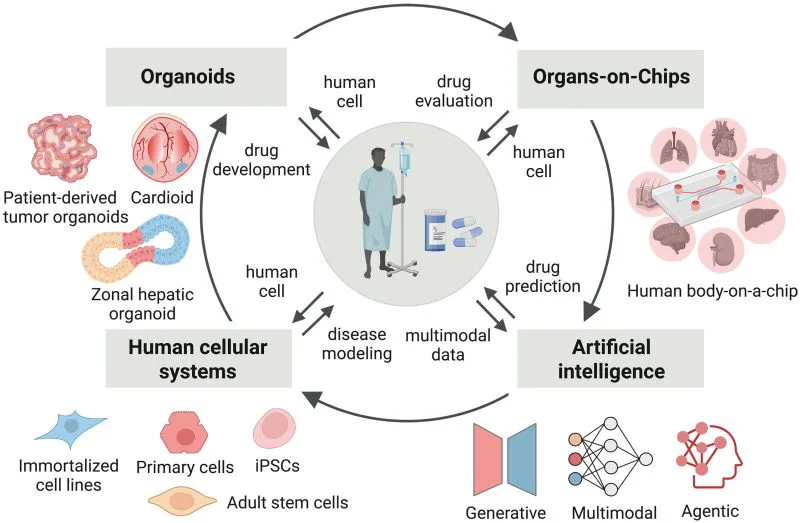
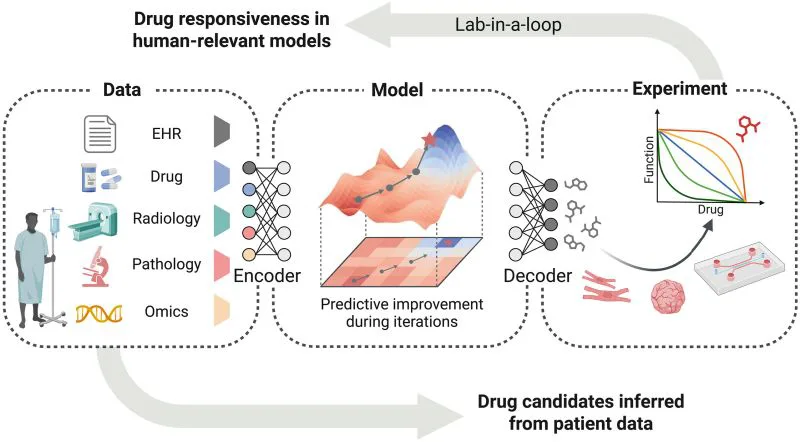
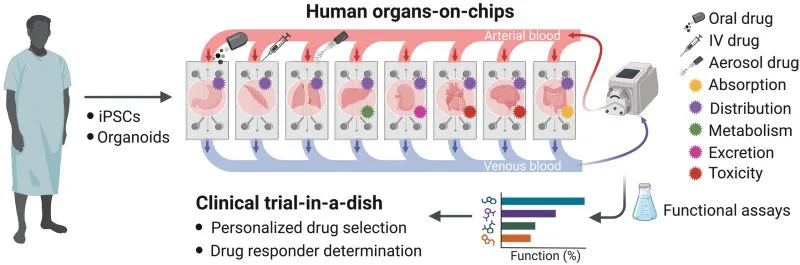
Over 90% of drug candidates that succeed in preclinical animal studies fail in human trials. One (but not the only) big reason is that animal physiology only approximates human biology. This gap has widened as modern therapies (oligonucleotide drugs, antibody-drug conjugates, targeted protein degraders) increasingly act on pathways absent in animals. A timely (but paywalled) article reviews the shift away from animal models toward human-based methods. The main approaches: 1️⃣ Human-derived cellular systems. Primary human cells (preserve mature tissue physiology), immortalized cell lines (scalability), adult stem cells, and induced pluripotent stem cells (iPSCs). Each has trade-offs and should be matched to disease type: e.g., iPSCs for genetically driven disorders. 2️⃣ Microphysiological systems (MPS) reconstruct tissue-level complexity. 2 main modalities: Organoids, self-organizing 3D tissues that recapitulate organ structure and function; Organs-on-chips: microfluidic devices that add fluid flow, shear stress, and mechanical cues, enabling modeling of breathing lungs, drug absorption, and immune interactions. Hybrid organoid-on-chip systems and multi-organ circuits are now approximating whole-body physiology in vitro. 3️⃣ AI at multiple leveles: de novo molecular design, active learning for closed-loop experimentation, multimodal foundation models (genomic/imaging/clinical data), and emerging agentic AI systems that can autonomously plan and execute experiments. Perhaps the most interesting contribution of this review is its 4-step framework for bringing these together: (1) lab-in-a-loop systems where AI and experiments iteratively refine each other during discovery; (2) organs-on-chips for pharmacokinetic and safety evaluation; (3) clinical trial-in-a-dish approaches that use patient-derived cells to predict efficacy across diverse cohorts before enrollment; and (4) digital-experimental twins, patient-specific simulations combining molecular, physiological, and clinical data for individualized treatment prediction. Regulatorily, momentum is real: the FDA Modernization Acts 2.0/3.0, the UK's "Replacing Animals in Science", and new NIH human-based research initiatives create support for NAMs as substitutes for animal testing. Recent concrete successes validate the approach: AI-designed TNIK inhibitor reached clinical trials in 18 months, Emulate Liver-Chip accepted into the FDA's ISTAND program, and iPSC-derived cardiomyocyte assays in testing guidelines. Ethically, NAMs reduce animal use while enabling more patient-aligned research. The main bottleneck is now institutional readiness: regulatory frameworks, ethical governance, and workforce training. The paper offers a vision for the next decade: animal studies moving from the default evidentiary foundation to a limited calibration role, while human-based approaches become the predictive core of drug development.