Nothing is ever simple with the microbiome
A fascinating Nature article (Human and bacterial genetic variation shape oral microbiomes and health, lnkd.in/dNPUvKJH) reminds us that our microbiome (here oral microbiome) is influenced by our genes and in turn influences our health. The study establishes a strong (host) genetic basis for the composition of the oral microbiome and its impact on dental health, specifically host-microbial interactions that contribute to tooth decay and loss. It suggests that a person's genetic capacity to process starch directly shapes their "microbial environment," potentially making them +/- susceptible to the dysbiosis that causes caries.
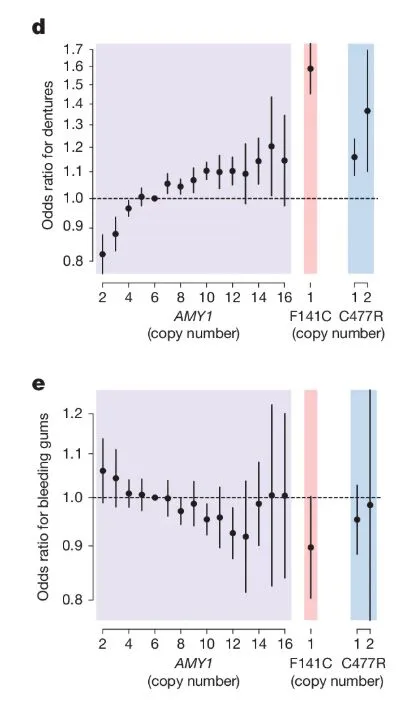
1️⃣ The study identified 11 human genomic loci that influence oral microbiome composition. Variants at 8 of these 11 loci also associated with the risk of needing dentures, a clinical proxy for significant tooth loss and caries.
The strongest association is AMY1 (Salivary Amylase): High copy numbers of the AMY1 gene, which increase the production of starch-breaking enzymes, are strongly linked to an increased risk of dentures. The figure illustrates the influence of the gene. PITX1 and FUT2: these loci also significantly associate with both microbiome composition and denture risk and are contributors to long-term dental decay.
2️⃣ It provides a molecular explanation for how certain bacteria "stick" to some people better than others. In "secretors" (individuals with a functional FUT2 gene), the oral cavity is rich in specific blood group antigens. Host genetics select for bacterial strains carrying specific adhesins (attachment proteins) like YadA-like, CshA, and mucin-binding domains. These proteins allow commensal bacteria to attach to host mucosal surfaces by recognizing these genetically determined antigens.
3️⃣ Diet implications: AMY1, which encodes the enzyme that breaks down dietary starches into simple sugars. Genetic variation in amylase alters the availability of simple sugars in the mouth, which in turn shifts the abundance of at least 42 bacterial species.
4️⃣ While genetics play a significant role, age remains a dominant driver of oral microbiome variation. Diversity increases sharply in the first few years of life as primary teeth are acquired and diet diversifies, then plateaus and slowly declines in late adulthood.