Not ONE but TWO AI (Co-)Scientist articles popped up in Nature today
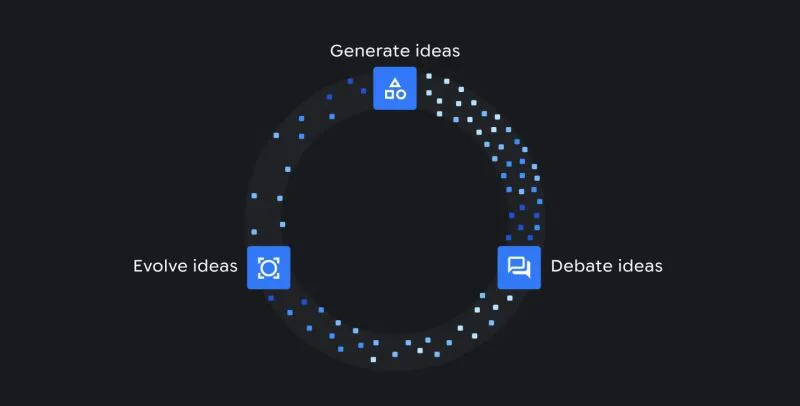
Not ONE but TWO AI (Co-)Scientist articles popped up in Nature today under Accelerated Review. 1️⃣ A multi-agent system for automating scientific discovery by the never-shy folks from FutureHouse/Edison Scientific, led by Samuel G. Rodriques, Michaela Hinks and Andrew White. Note the choice of words: "automating." "By integrating literature search agents with data analysis agents, Robin can generate hypotheses, propose experiments, interpret experimental results, and generate updated hypotheses, achieving a semi-autonomous approach to scientific discovery". Experiments still need to be performed by humans at this point. The AI scientist was "able to identify promising therapeutic candidates for dry age-related macular degeneration (dAMD), the major cause of blindness in the developed world." 2️⃣ Accelerating scientific discovery with Co-Scientist by a team led by Vivek Natarajan and colleagues at Google DeepMind. Note the more muted choice of words: "Accelerating." Their AI co-scientist helps human scientists: "conditioned on their research objectives and prior scientific evidence, it formulates demonstrably novel research hypotheses for experimental verification." I have a sweet spot for this paper due to their use of a tournament evolution process for self-improving hypothesis generation. It is part of a movement that is seeing evolutionary algorithms and thinking become more prevalent across the board for improvement, including recursive self-improvement. This resurgence has me giddy with excitement (and renewed relevance?). Here the AI co-scientist "helped identify new drug repurposing candidates and synergistic combination therapies for acute myeloid leukemia, which were validated through in vitro experiments". It is indeed a watershed moment for AI-for-Science, especially in biology and drug discovery -even if drugs identified by the AI scientists have not been evaluated as drugs. An interesting common feature of both approaches is that AI agents critique hypotheses and examine results among themselves, thereby increasing the robustness of the process.
https://www.nature.com/articles/s41586-026-10652-y
https://www.nature.com/articles/s41586-026-10644-y
https://deepmind.google/blog/co-scientist-a-multi-agent-ai-partner-to-accelerate-research/
Image from Google Deepmind's blog