Click Not
I have always been slightly uncomfortable with the idea of "ambient AI", AI that listens and watches you and makes decisions on your behalf because "it knows you." The problem, for me, is that it can nudge you, gently but consistently over time, toward the version of you it knows. You become a self-fulfilling prophecy. It's like the old (and new) Amazon recommender that kept showing me baby clothes because I bought a bib for a friend's baby. Yes, at some point I was looking for baby stuff, but that does not define me.
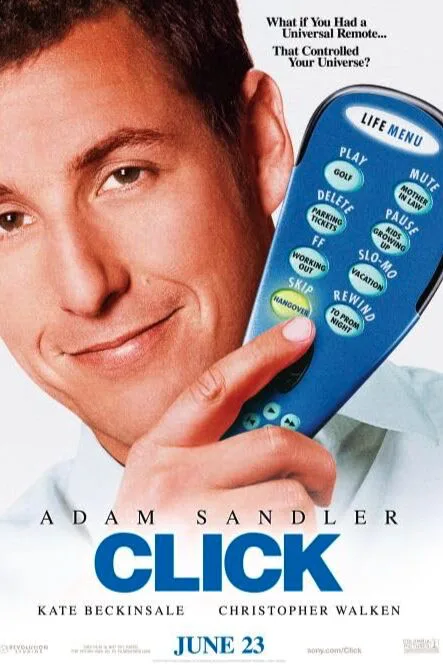
The idea is seductive: you don't have to worry about a thing, AI will take care of it. But it reminds me of the (rather appalling) Adam Sandler movie Click (lnkd.in/gPj7eRcX), where a divine universal remote gives him the power to skip certain moments he dislikes. But the remote generalizes aggressively: it then skips all similar moments automatically. That's how he ends up with a successful career, divorced, morbidly obese, with children who hate him and no relationship to speak of, having spent little conscious time living his life. That's divine ambient AI for you. How it generalizes matters.
In his recent blog post (lnkd.in/gcnKEFX2), NFX's Pete Flint writes about the "screenless startup", the promise of ambient AI that doesn't intrude as an interface but may intrude in many other ways. Pete writes: "The power of ambient computing is that it doesn’t require constant oversight, but the tradeoff is that users have limited opportunities to opt-out. [...] for the most part this may not be as big of an issue as it seems." Opting out is one big issue, but controlling the model the AI builds of you is the much bigger issue. I am not against the concept, for example a trip booking agent that understands my weird preferences deeply to propose packages that are already more likely to be great for me. But an agent that decides what should be in my newsfeed, no thank you, that sounds too much like Facebook and TikTok and... LinkedIn.