Breaking news in the world of methane burps
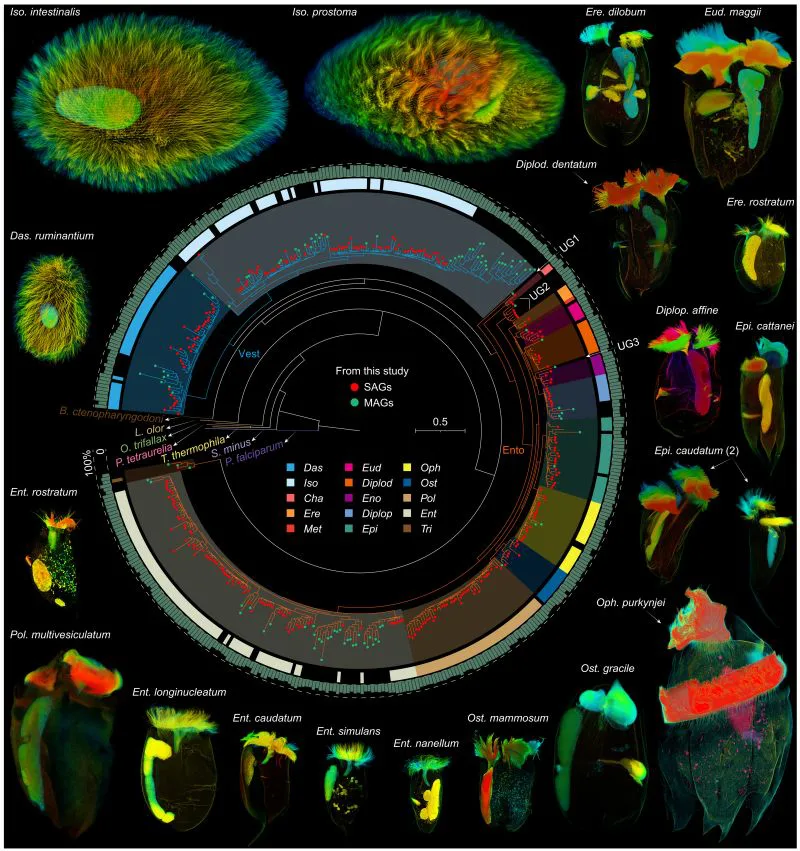
🐮 Ruminant animals are a major source of methane gas emissions: “cow burps” and other ruminant burps are responsible for about 30% of anthropogenic methane emissions. A new study published yesterday in Science could be a really big deal if confirmed: we have known for a long time that protozoa are key actors of the rumen microbial ecosystem, even “ecosystem engineers” (https://lnkd.in/gFf9rGru), representing up to 50% of the microbial biomass of the rumen as they are typically 100 times larger than rumen prokaryotes. But the nature of the interaction between protozoa, bacteria and methanogenic archea has remained elusive. 💡 The study (“Rumen ciliates modulate methane emissions in ruminants” -see why this post's title is a little more click-baity) by a Chinese Academy of Sciences team in Wuhan, China, found a new, single membrane (different from mitochondria) organelle inside rumen protozoa that produces hydrogen gas consumed by archea to produce methane. The discovery of the organelle, which the authors named hydrogenobody (HB), elucidates ONE mechanism that stimulates methanogenesis and may point the field toward new upstream interventions to prevent or limit methane production. For example, some groups of protozoa have a lot more HBs than others, offering a to differentiate high-emission vs low-emission animals and opening a new research avenue to prevent or inhibit high HB protozoa. The reality of reducing livestock methane emissions, however, probably requires a multi-pronged approach to address the multiple methanogenic pathways.