As long as customers are human (agents anyone?)
https://www.facebook.com/watch/?v=459414553371829
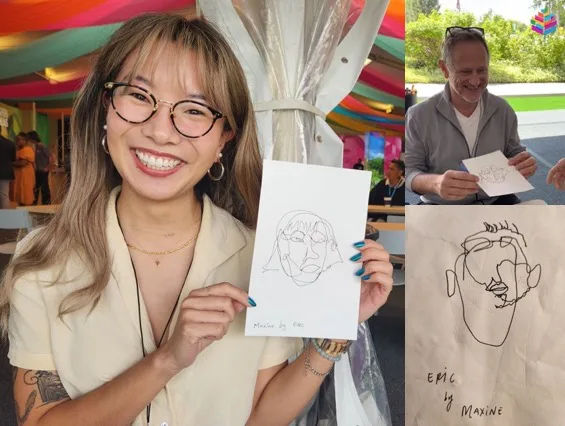
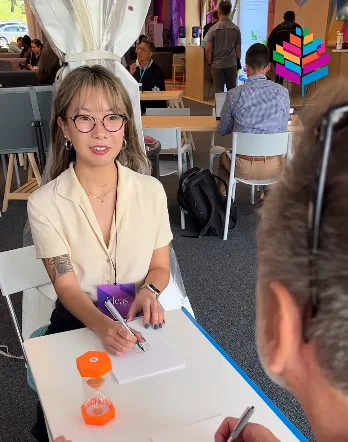
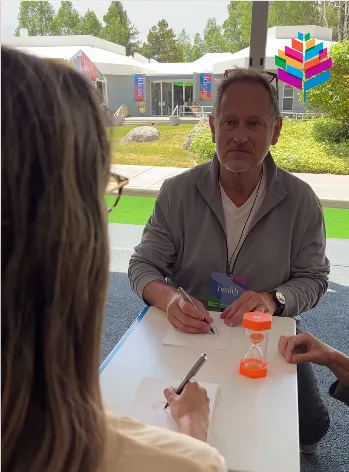
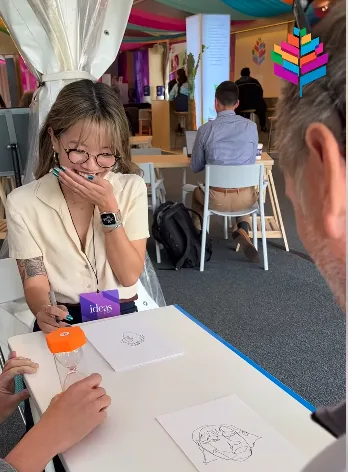
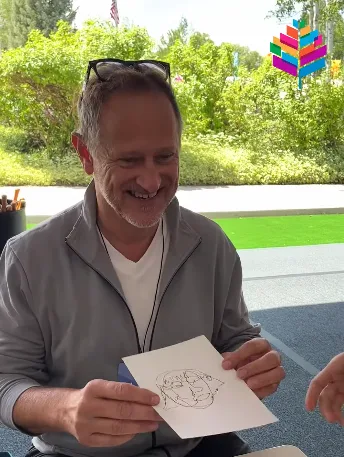
Thanks to Elissa Bowes-Arbeitman I found a video of my awesome "Draw Together Strangers" experience at The Aspen Institute's health festival in June.
👨🎨 DrawTogether Strangers is a clever, fun and incredibly liberating experience.
Brought by Wendy MacNaughton (lnkd.in/gq8ufSyA), it makes you look a stranger in the eyes for 1 minute while drawing their portrait without ever lifting pen from paper or looking at your drawing. What is so liberating, you say, from all these constraints? Well, for starters, you are not expected to produce a piece of art (although it does end up looking like a Picasso esquisse) or a high-fidelity portrait (well, I hope my triple chin is not as prominent as my 'portrait' suggests, thank you stranger Maxine! 👩🎨 ). For someone who can't draw, that is definitely freeing. But the drawing is not the main draw (see what I did?), it is not even the point. Quoting Wendy:
"We live in a fractured world, endlessly divided by class, race, gender, sexuality, politics, religion and on and on... One of the saddest consequences of this? Frustrated, fearful, sometimes just lost in our own worlds, we look away. We don’t see each other anymore.
Luckily there exists a sophisticated tool to help us pay attention and connect with people we might otherwise avoid or ignore. It’s called a pen. A simple drawing exercise can rewire our brains into SEEING one another again. All it takes is 60 seconds, some paper and pens, and two strangers."
And on top of that, I found that I am a pretty decent artist when I don't look at what I am doing.
Used Meta AI to edit a selfie, now Instagram is using my face on ads targeted at me
😱 ... that's a quote from Redditor Green_Video_9831 (lnkd.in/gzcDJvJR).
We have William Gibson's old joke to be grateful for (lnkd.in/gz9rfFgm):
The future is already here, [thank goodness] it is just unevenly distributed.
("Thank goodness" not part of Gibson's original quote 😊. Just replace "future" with dystopia and you will see why.)