Alexis I
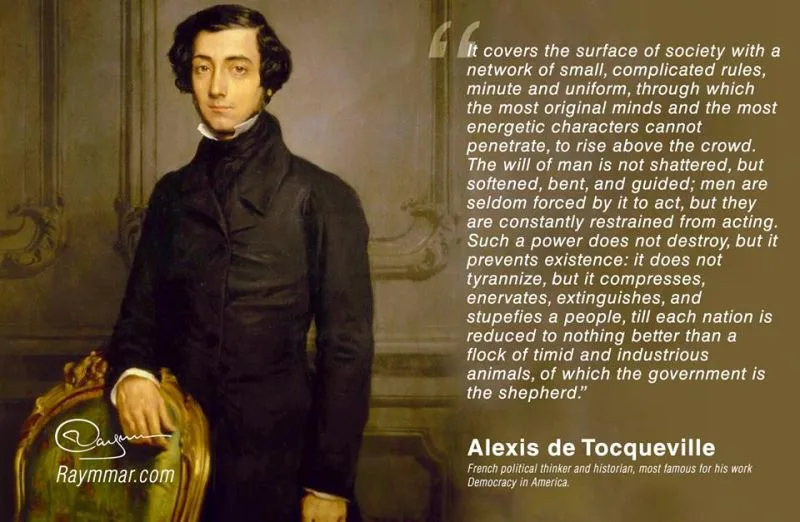
Alexis de Tocqueville popped up on my LinkedIn feed today and it is amazing how fresh and relevant he is, almost 200 years after writing Democracy in America.
One of the most shockingly modern concepts you can find in Volume II, Part IV, Chapter 6 is the emergence of bureaucratic tyranny or "soft despotism". Tocqueville imagines a new form of tyranny unlike anything in the ancient world: not a brutal despot, but an immense, tutelary power that covers society with a network of small, complicated, painstaking rules. He writes that this power doesn't destroy or tyrannize outright, but rather "hinders, compromises, enervates, extinguishes, dazes, and finally reduces each nation to being nothing more than a herd of timid and industrious animals of which the government is the shepherd." The key insight is that this form of control works not through violence but through procedural exhaustion, making action so encumbered that the will to act simply dies. Although he speaks of government, if you have ever had to fight your health insurance for coverage you get the idea.
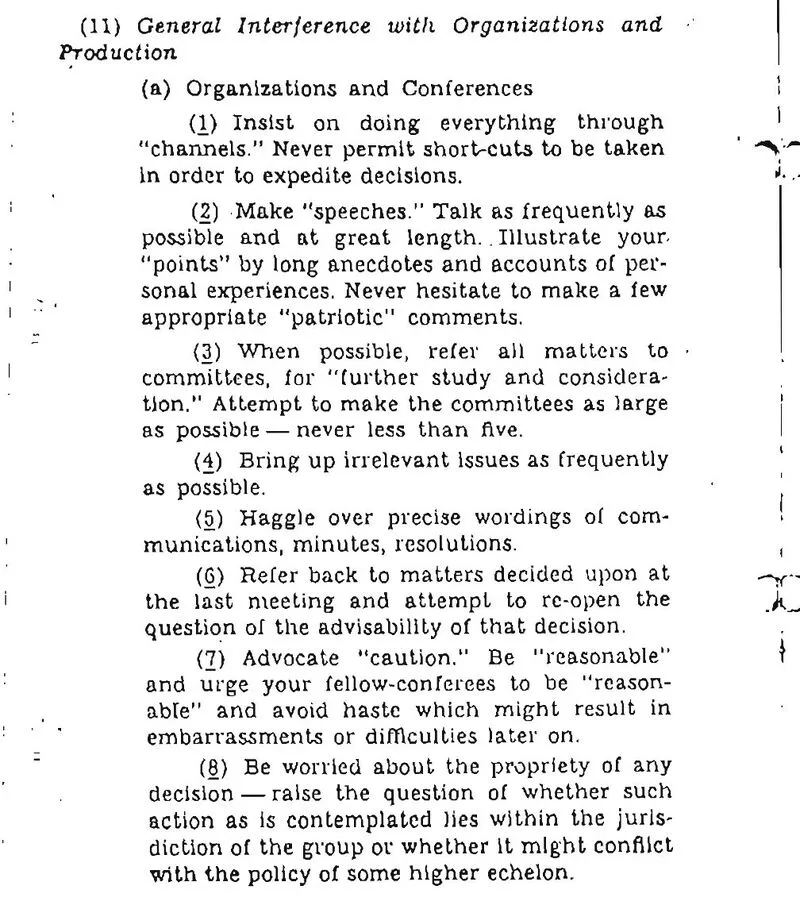
This sabotage of democratic intent is eerily similar to the 1944 OSS Simple Sabotage Field Manual, an excerpt of which is shown here. Tocqueville was describing what he saw as an inadvertent pathology of democratic life, a tendency democracies would need to consciously resist. The OSS manual essentially reverse-engineered that diagnosis into an operational playbook. It confirms Tocqueville's insight by showing that the bureaucratic tendencies he identified are so reliably corrosive that a foreign intelligence service could deploy them as weapons. The unsettling implication is how difficult it can be to distinguish deliberate sabotage from ordinary institutional behavior.
If the pathologies of democracy can be weaponized, they are. And technology makes it easy.